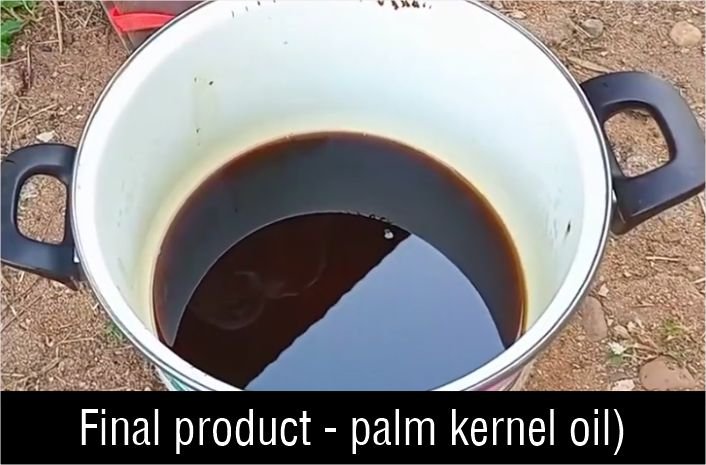
As a child in Abia State, Nigeria, I cracked palm nuts one by one between two stones, ducking the shell splinters that flew toward my eyes. My grandmother roasted the kernels in a big pot until they turned black and released their oil. That was palm kernel oil at home, long before I ever knew its proper name.
Palm kernel oil comes from the same palm fruit as red palm oil, yet it is a completely different oil.
It is pressed or extracted from the hard seed inside the nut, not from the soft orange pulp.
This page sets out what palm kernel oil is, how it is extracted in villages and factories, and which types reach the market.
It covers the traditional black kernel oil my family still makes, along with soap, cosmetics, food fats and industrial uses.
Personal experience and research appear side by side, and each is clearly labeled so you can tell them apart.
Ready to get fresh red oil for a fair price? Visit the red palm oil shop page to see current sizes and prices.
Table of Contents
What Is Palm Kernel Oil?
Palm kernel oil, usually shortened to PKO in the trade, is the oil extracted from the kernel. The kernel is the white seed inside the hard shell of the palm nut.
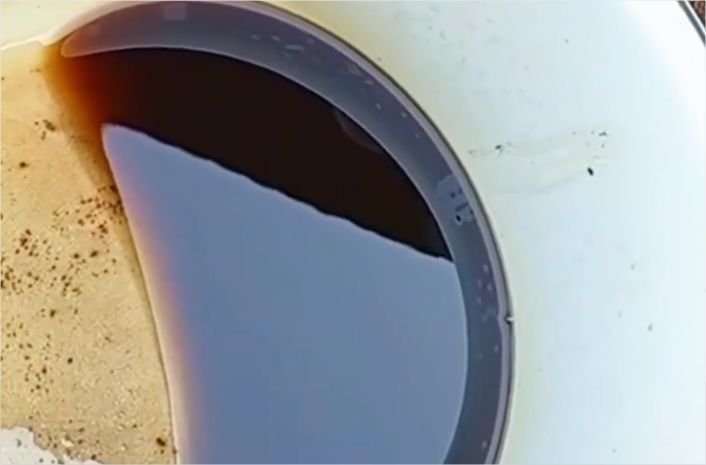
It is pale yellow when pressed raw and dark brown or black when made from roasted kernels.
Unlike palm fruit oil, it is rich in lauric acid, which makes it chemically closer to coconut oil than to red palm oil.
Factories around the world use it widely in soap, detergents, cosmetics and confectionery fats.
In southeastern Nigeria, families also roast kernels at home to make a black kernel oil called ude aki.
Palm Kernel Oil at a Glance
| Feature | Palm kernel oil |
|---|---|
| Comes from | The kernel inside the palm nut |
| Color | Pale yellow when pressed raw, dark brown to black when roasted |
| Main fatty acid | Lauric acid |
| Closest relative | Coconut oil |
| Main uses | Soap, detergents, cosmetics, confectionery fats |
| Main by-products | Palm kernel cake and kernel shells |
| Traditional form | Black kernel oil, known as ude aki in Igbo |
From Fruit to Kernel
Every palm fruit holds a nut at its center, and every nut holds a kernel inside a hard shell.
Mills and village processors separate the nuts from the pulp when they make red oil.
In Abia State, the nuts left after processing were spread out to dry in the sun for months.
By then the kernel had almost pulled away from the inside of the shell, so it fell out cleanly when cracked.
Cracking was slow, careful work, done by hand with two stones, one nut at a time. Shell splinters could fly into the eyes or cut the skin, so we learned to crack with care.
Later, owners of small cracking machines began moving from village to village, cracking nuts for anyone who paid a small fee.
That service saved families days of slow work and many small injuries to hands and eyes.
This is my family’s experience, not a survey of every Nigerian village. The seed itself, from its structure to its uses beyond oil, is covered in the palm kernel itself.
How Palm Kernel Oil Is Extracted
Palm kernel oil reaches the market through two very different routes: the village pot and the factory press.
Both start with clean, dry kernels, but they produce oils that look and smell quite different.
My grandmother made black kernel oil in a large pot of the kind we use for frying garri, with a fire burning underneath.
She stirred the kernels from time to time until the heat turned them black and they released their oil into the pot.
The kernels were never pounded in her method, only roasted and stirred until the oil came out.
She made it in large quantities and sold it to soap makers, but the work was so tedious that the family eventually stopped selling. My mother still makes ude aki for the family, and so do I.
| Method | How it works | Oil it produces |
|---|---|---|
| Village roasting | Kernels are roasted and stirred in a large pot over fire until they release oil | Dark brown to black oil with a strong smell |
| Mechanical pressing | Kernels are cleaned, flaked, heated and squeezed in screw presses | Pale yellow crude kernel oil |
| Solvent extraction | Pressed cake or flakes are washed with a solvent, usually hexane | Extra oil recovered from the cake |
Feedipedia, the animal feed information system hosted by FAO, reports that kernels yield roughly 50 percent oil and 50 percent cake.
It notes that solvent extraction recovers more oil but costs more and suits large industrial plants.
Each method, with its equipment and yields, is set out in every palm kernel extraction method. Kernel extraction is one branch of how each palm oil is processed, alongside red, crude and refined oil.
Types of Palm Kernel Oil
Palm kernel oil comes in several forms, depending on how it is extracted and what happens to it afterward. Each type has its own color, its own smell and its own main buyers.
| Type | How it is made | Main uses |
|---|---|---|
| Black kernel oil (ude aki) | Roasted kernels in a pot over fire | Traditional body cream and home remedies in southeastern Nigeria |
| Crude palm kernel oil | Pressed or solvent extracted from raw kernels | Sold to refineries and soap makers |
| Refined palm kernel oil | Crude kernel oil refined, bleached and deodorized | Food fats, cosmetics, soap |
| Palm kernel olein and stearin | Refined kernel oil split into liquid and solid parts | Confectionery fats, coatings, creams |
| Hydrogenated palm kernel oil | Kernel oil hardened with hydrogen | Confectionery coatings, whipped toppings |
In my family, ude aki was never used for cooking, only for other purposes. We used it as a body cream and in traditional home remedies, which is a cultural practice rather than proven medicine.
The hardened form, its uses and the questions it raises are covered in hardened palm kernel oil.
How Kernel Oil Differs From Palm Oil and Coconut Oil
Palm kernel oil and palm fruit oil come from the same fruit, but their chemistry is very different.
Kernel oil is rich in lauric acid, while palm fruit oil is rich in palmitic and oleic acids.
A full side by side comparison sits in kernel oil against palm oil. For the wider family of palm oils, see how palm fruit oil and kernel oil fit together on the Palm Oil Guide.
Coconut oil is kernel oil’s closest relative, since both are lauric oils used in similar products. The Codex standard for named vegetable oils sets similar lauric acid ranges for both.
| Point | Palm kernel oil | Coconut oil |
|---|---|---|
| Source | Kernel of the oil palm nut | Flesh of the coconut |
| Lauric acid, Codex range | 45 to 55 percent | About 45 to 53 percent |
| Main uses | Soap, detergents, cosmetics, confectionery | Soap, cosmetics, cooking, confectionery |
| Main producers | Indonesia, Malaysia, West Africa | Philippines, Indonesia, India |
The same fruit also yields red oil from the same fruit for cooking and refined oils from the palm for factories and frying.
Uses of Palm Kernel Oil
Palm kernel oil reaches far more products than most people realize, from bathroom shelves to sweet shops. Its lauric acid content gives it qualities that few other oils share.
Soap and Detergents
Soap makers prize kernel oil because it gives a hard bar and a rich, quick lather. That is why my grandmother’s black kernel oil had buyers among the soap makers of Ntigha.
She also made soap for the household with ash from burned palm bunch stalks, though she never sold that soap.
Factories now turn kernel oil into cleaning agents for shampoos and detergents, including foaming agents from kernel oil.
The home and craft side is covered in palm oils in soap making.
Cosmetics and Personal Care
Kernel oil and its derivatives go into lotions, creams, lip balms, shampoos and conditioners.
Brands use it for texture, foaming and moisture, sometimes under ingredient names that hide its source.
The details, including what research does and does not show, sit in kernel oil in beauty products.
Food and Confectionery
Refined kernel oil and its fractions are used in chocolate coatings, biscuit creams, whipped toppings and ice cream.
They melt quickly near body temperature, which suits chocolate coatings and cream fillings well.
Industry
Beyond soap and food, kernel oil feeds the oleochemical industry, which turns it into fatty acids, fatty alcohols and glycerin.
The wider map of kernel oil in modern industry shows where these products end up.
By-Products of Kernel Processing
Kernel processing leaves two main by-products, and both have real value, so neither needs to go to waste.
| By-product | What it is | Main uses |
|---|---|---|
| Palm kernel cake | The meal left after extracting the oil | Livestock and poultry feed |
| Kernel shells | The hard shells left after cracking | Boiler fuel, cooking fuel, activated carbon |
Feedipedia notes that cake from mechanical pressing keeps more oil than cake from solvent extraction.
The feed side is covered in palm kernel cake for livestock, and the shells in what becomes of kernel shells.
Common Myths About Palm Kernel Oil
Palm kernel oil is easy to confuse with other oils, and several myths follow it around. Four of them come up again and again among buyers and readers online.
- Palm kernel oil is just palm oil. It comes from the seed, not the pulp, and its chemistry is closer to coconut oil.
- Black kernel oil is burnt or dirty. Its dark color comes from roasting, the traditional way of making it, not from spoilage.
- Solid kernel oil has gone bad. Kernel oil firms up in cool weather and melts again when warmed gently.
- All kernel oil is hydrogenated. Most kernel oil is sold crude or refined, and only some is hardened for special uses.
Safety When Cracking and Roasting Kernels
Village kernel work carries real risks, and I learned them as a child. Hand cracking sends sharp shell splinters flying, and roasting means long hours over an open fire.
| Task | Main risk | Simple precaution |
|---|---|---|
| Cracking nuts with stones | Shell splinters in the eyes or skin | Crack slowly, shield the eyes and keep small children away |
| Machine cracking | Moving parts and flying shells | Let trained operators run the machine and stand clear |
| Roasting kernels | Burns, smoke and spilled hot oil | Use a stable pot, stir with a long handle and keep water away from hot oil |
| Storing oil | Spoilage from water and dirt | Use clean, dry, sealed containers |
These precautions come from my family’s experience rather than a formal safety study. Still, they reflect the hazards anyone working with kernels at home will meet.
Buying and Storing Palm Kernel Oil
Good kernel oil smells clean, nutty or roasted, depending on its type, and never sour or rancid. Black kernel oil should smell strongly roasted, while pale refined oil should smell of very little.
Store kernel oil in a clean, dry, sealed container, away from heat and sunlight. Kernel oil is fairly solid in cool weather and melts easily when warmed, which is normal.
Some buyers also ask where their kernel oil comes from and how it was produced. The wider debate is covered in sustainability questions behind kernel oil, from forests to workers.
Health questions are a separate matter, set out with sources and their limits in kernel oil health research.
What Research Shows About Palm Kernel Oil
Research on palm kernel oil centers on its composition, its extraction and its traditional forms.
Four sources stand out for anyone producing, buying or studying kernel oil today.
The Codex standard sets lauric acid at 45 to 55 percent of the fatty acids in palm kernel oil. It sets myristic acid at 14 to 18 percent, placing kernel oil firmly among the lauric oils.
A 1992 thesis from the University of Ghana studied traditional kernel oil processing by village producers, mostly women.
It found that every surveyed processor roasted kernels, producing a dark brown, strong scented oil, and that roasting raised the yield.
Feedipedia reports that kernels yield about 50 percent oil and 50 percent cake. It adds that mechanically pressed cake keeps about 6 to 15 percent oil, compared with about 3 percent after solvent extraction.
USDA Foreign Agricultural Service data put world palm kernel oil production at roughly 9 million tons in recent seasons.
That is about a tenth of world palm oil output, since each fruit holds far more pulp than kernel.
These sources have limits worth stating plainly before you rely on them. The Ghana thesis is from 1992 and studied Ghanaian processors, not Igbo villages.
The USDA production figures also change from one season to the next.
Conclusion
The stones my family used to crack palm nuts are gone, replaced first by traveling machines and then by factory presses.
Yet the black kernel oil my grandmother roasted for soap makers is still made in my family’s home today.
Palm kernel oil connects that village pot to soap bars, cosmetics and chocolate coatings around the world.
Learn which type you are buying, store it cool and sealed, and ask where it came from.
Then choose the kernel oil that suits your use, from pale refined oil to black ude aki.
Frequently Asked Questions
What is palm kernel oil made from?
Palm kernel oil is made from the kernel, the white seed inside the palm nut’s shell. It does not come from the soft orange pulp of the fruit.
What is ude aki?
Ude aki is the Igbo name for the black palm kernel oil made at home. Families roast kernels in a pot until they release a dark, strong smelling oil.
Is palm kernel oil the same as palm oil?
No, palm kernel oil comes from the seed, while palm oil comes from the fruit pulp. Kernel oil is also rich in lauric acid, much like coconut oil.
What is palm kernel oil used for?
Palm kernel oil is used mainly in soap, detergents, cosmetics and confectionery fats. In southeastern Nigeria, many families also use black kernel oil as a traditional body cream.
Disclaimer. This article is for informational purposes only and does not constitute medical, skincare or nutritional advice. The author is not a doctor, pharmacist or any other kind of medical professional. Traditional uses of palm kernel oil described here are cultural practice, not proven treatments. Consult a qualified healthcare provider before using any oil to treat a health condition.