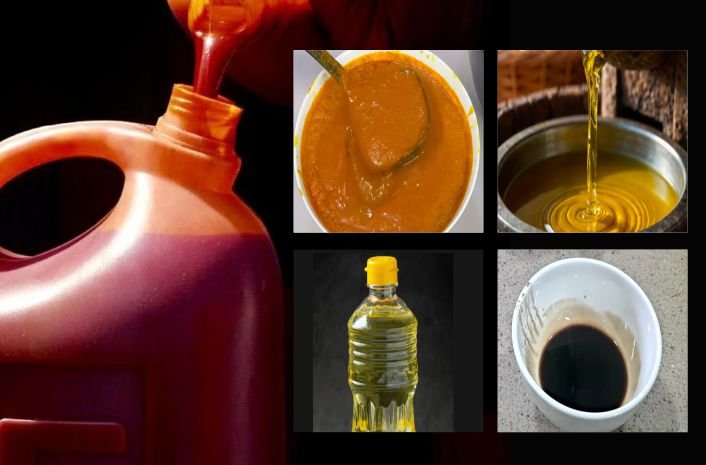
Two oils from the same fruit, yet worlds apart in color, nutrition, and kitchen performance. Knowing which one belongs in your pot changes everything about how you cook and eat.
Palm oil is one of the most consumed vegetable oils globally, yet few people understand what separates red palm oil from refined palm oil.
I grew up in Abia State, Eastern Nigeria, where oil palm trees are not a commodity; they are part of daily life.
My family farmed them, harvested the fruit, and pressed red palm oil the same way our ancestors did.
I have also watched that same red palm oil leave for industrial processors and return as something pale, odorless, and nutritionally unrecognizable.
That firsthand experience, from farm to keg to commercial sale through the Palm Oil Pathway, is what grounds everything in this comparison.
Both oils come from the oil palm fruit, but their processing, nutritional profiles, and culinary roles are completely different.
This article focuses on those differences clearly and honestly.
Table of Contents
From the Farm to the Keg: Why This Comparison Comes From Someone Who Has Done Both
I have produced red palm oil from fruit harvested on my own farm in Abia State and watched red palm oil leave the same community for industrial refining.
Those are not two things I read about; they are two realities I have lived on opposite sides of.
That direct experience of both forms, from pressing to processing to selling red palm oil commercially through Palm Oil Pathway, is what makes this comparison different from content written by someone who has only ever seen these oils in a bottle.
Defining Red Palm Oil and Refined Palm Oil
Red palm oil is crude palm oil that has been partially processed to preserve its natural carotenoids, tocotrienols, and deep red-orange color while removing impurities and moisture.
Refined palm oil is extracted from the same oil palm fruit but goes through full refining, bleaching, and deodorization, producing the pale yellow, neutral-tasting oil sold globally in processed foods.
Red Palm Oil vs Palm Oil: Differences at a Glance
The table below summarizes the core differences between red palm oil and refined palm oil across the categories that matter most for cooking, health, and commercial use.
| Feature | Red Palm Oil | Refined Palm Oil |
|---|---|---|
| Source | Oil palm fruit mesocarp | Oil palm fruit mesocarp |
| Processing | Minimal, partial refining | Full RBD refining |
| Color | Deep red-orange | Pale yellow |
| Flavor | Earthy, rich | Neutral |
| Nutritional profile | High in carotenoids, tocotrienols | Low in micronutrients |
| Smoke point | Around 180°C | Around 235°C |
| Shelf life | Shorter | Longer |
| Common uses | Traditional cooking, health supplements | Processed foods, frying, cosmetics |
| Cost and availability | Higher cost, less widely available | Lower cost, globally available |
How They Are Made: A Brief Overview
Red palm oil is obtained directly from the fruit of the palm tree after cooking and pressing to get the crude palm.
The crude palm is then heated once more to release the bright red palm oil, and then filtered to remove impurities and debris. And that is it.
Refined palm oil goes through the full RBD process: refining, bleaching, and deodorization. Each stage removes something.
Bleaching takes the color. Deodorization takes the aroma.
What remains is stable, neutral, and nutritionally hollow compared to what the fruit originally contained. Both processes start from the same crude palm oil.
The difference is entirely in how far the processing goes and what it deliberately preserves or removes. Full production guides for both oils are available in dedicated posts on this site.
Nutritional Comparison of Red Palm Oil and Palm Oil
- Calories and Macronutrients: Both oils deliver approximately 884 calories per 100 grams with similar saturated and unsaturated fatty acids, but red palm oil retains far superior micronutrient content after processing.
- Vitamin Content: Red palm oil is rich in beta-carotene and tocotrienols, a rare form of vitamin E. Refined palm oil loses both during the bleaching and deodorization stages.
- Antioxidant Levels: Red palm oil contains carotenoids, tocotrienols, and tocopherols that protect cells from oxidative damage. Refined palm oil retains negligible levels of these compounds after industrial processing.
See the nutritional composition of red palm oil. Also read refined palm oil nutrition.
Color, Taste, and Aroma Differences
Color
Red palm oil’s deep red-orange color comes from preserved carotenoids.
Refined palm oil is pale yellow because bleaching permanently strips those same pigments during industrial processing.
Taste
Red palm oil has a rich, earthy, nutty flavor that defines West African cooking.
Refined palm oil is deliberately neutral, contributing no taste to any product it enters.
Aroma
Red palm oil carries a warm, distinctive aroma that signals quality in traditional kitchens.
Refined palm oil is completely odorless by design, engineered for invisible use in commercial food production.
Which Oil Is More Suitable for Different Recipes?
Red palm oil belongs in traditional soups, stews, and dishes where its color and flavor are fundamental to the recipe. See why African chefs love it.
Refined palm oil belongs in commercial baking, high-temperature frying, and applications requiring a neutral fat.
Using refined palm oil, where red palm oil belongs, produces something nutritionally inferior and culinarily different from what the dish was meant to be.
Health Benefits and Considerations
| Red Palm Oil | Refined Palm Oil |
|---|---|
| Rich Source of Carotenoids: Red palm oil delivers more beta-carotene than most fruits and vegetables combined. | Nutrient Loss During Refining: The RBD process removes virtually all carotenoids and tocotrienols from refined palm oil. |
| Supports Eye Health: Provitamin A in red palm oil directly maintains healthy vision and long-term retinal function. | Saturated Fat Content: Refined palm oil’s neutral profile makes overconsumption easy in processed foods without consumer awareness. |
| Contains Powerful Antioxidants: Tocotrienols and carotenoids neutralize free radicals that contribute to cellular aging and chronic inflammation. | Role in Processed Foods: Refined palm oil appears in thousands of global products without clear labeling for consumers. |
| May Support Heart Health: Tocotrienols suggest cardioprotective properties, though moderation remains important due to saturated fat content. |
Red Palm Oil vs Palm Oil for Cooking
Frying: Refined palm oil’s higher smoke point makes it better suited for deep frying at a commercial scale, while red palm oil works well for pan frying and shallow frying at moderate temperatures without breaking down.
Baking: Refined palm oil produces neutral-tasting baked goods. Red palm oil adds color and a distinctive flavor that works in specific traditional baked recipes but not in standard commercial baking applications.
Soups and Stews: Red palm oil is irreplaceable in traditional West African soups. In culture, specifically Igbo, we make ofe onugbu, egusi, and ofe akwu weekly, and no substitute delivers the same color, flavor, and nutritional depth that genuine red palm oil brings to these dishes.
Traditional African Dishes: Red palm oil is not merely an ingredient in these dishes. It is the foundation on which the entire flavor profile is built. In my community, replacing it with refined palm oil is taboo. Okay, maybe not a taboo, but why would you anyway, when it produces something technically edible but culinarily and culturally hollow?
Commercial Food Production: Refined palm oil dominates commercial food production globally due to its neutral flavor, long shelf life, and high smoke point across industrial frying and baking applications, while red palm oil does not stand a chance here. This is the adge for refined palm oil.
Price and Availability
Refined palm oil is cheaper and widely available globally. Red palm oil costs more due to minimal processing, shorter shelf life, and smaller production scale.
Outside West Africa, it is a specialty product. In Nigeria, it is the everyday cooking oil, sold directly by farmers and processors in kegs of various sizes.
Palm Oil Pathway currently supplies red palm oil in 1-liter, 2-liter, 3-liter, and 25-liter packaging for household and commercial buyers across Nigeria.
Pros and Cons
Advantages
| Red Palm Oil | Refined Palm Oil |
|---|---|
| Exceptional Nutrient Density: Red palm oil delivers carotenoids and tocotrienols that refined palm oil cannot match in any meaningful nutritional quantity. | High Smoke Point for Frying: Refined palm oil handles high-temperature cooking without breaking down, making it highly reliable for deep frying applications. |
| Traditional Culinary Authenticity: Red palm oil produces flavors and colors in West African cooking that no substitute can replicate with equivalent accuracy. | Long Shelf Life and Stability: The RBD process removes oxidation-causing compounds, giving refined palm oil exceptional shelf stability for commercial storage and distribution. |
| Natural Minimal Processing: Red palm oil reaches the consumer without industrial chemical intervention, preserving its natural fatty acid profile and bioactive compounds. | Neutral Flavor for Commercial Use: Refined palm oil does not interfere with product taste, making it the preferred fat across global food manufacturing operations. |
Disadvantages
| Red Palm Oil | Refined Palm Oil |
|---|---|
| Shorter Shelf Life: Red palm oil oxidizes faster than refined palm oil, requiring proper storage and timely consumption after opening the container. | Minimal Nutritional Value: Refining removes carotenoids and tocotrienols that make red palm oil valuable, leaving refined palm oil with mostly fat and calories. |
| Strong Flavor Limits Use: The distinct earthy taste makes red palm oil unsuitable for recipes requiring a completely neutral cooking fat. | Environmental Concerns at Scale: Large-scale refined palm oil production is linked to deforestation, habitat destruction, and significant carbon emissions in major producing countries. |
Which Is Better: Red Palm Oil or Palm Oil?
Best for Nutrition: Red palm oil is far superior nutritionally, delivering carotenoids, tocotrienols, and provitamin A that refined palm oil loses entirely during industrial processing.
Best for Everyday Cooking: Red palm oil for traditional and home cooking. Refined palm oil for high-heat applications requiring a completely neutral fat without any flavor influence.
Best for Commercial Food Processing: Refined palm oil dominates commercial production due to neutral flavor, high smoke point, and long shelf life across industrial applications globally.
Best for Traditional Recipes: Red palm oil is the only correct choice for authentic West African soups, stews, and traditional dishes. There is no genuine substitute that delivers the same result.
Conclusion
Red palm oil and refined palm oil begin at the same source but arrive in completely different places.
Red palm oil preserves what the fruit naturally offers: nutrition, color, flavor, and generations of culinary wisdom passed down through communities like mine in Abia State Nigeria.
Refined palm oil trades those qualities for industrial convenience and commercial scale.
Having farmed, processed, and sold red palm oil my entire life, I can say with confidence that the choice between these two oils depends entirely on what you are cooking, what you want from your oil nutritionally, and whether authenticity or neutrality matters more in your kitchen.
Frequently Asked Questions
Is red palm oil healthier than refined palm oil?
Yes. Red palm oil retains carotenoids and tocotrienols that refining removes, making it significantly more nutritious than refined palm oil.
Can red palm oil replace regular palm oil in recipes?
It depends on the recipe. Red palm oil adds color and flavor, making it unsuitable where a completely neutral fat is needed.
Why is red palm oil orange or red in color?
Its color comes from carotenoids, natural pigments preserved because red palm oil skips the bleaching stage used in full industrial refining.
Does refining palm oil remove nutrients?
Yes. The bleaching and deodorization stages of refining remove most carotenoids and reduce tocotrienol content significantly from the original crude oil.
Which oil has more vitamin A?
Red palm oil contains far more provitamin A through its carotenoid content than refined palm oil, which loses most during industrial processing.
Is red palm oil good for frying?
Yes, at moderate temperatures. Its smoke point is lower than refined palm oil, making it better suited for pan frying than deep frying.

Chimeremeze Emeh is a tropical crop farmer and chemical engineer from Ntigha, Isiala Ngwa North LGA, Abia State, Eastern Nigeria, specializing in palm oil and cassava, with over 30 years of hands-on experience growing, harvesting, and processing red palm oil. He runs community engagement workshops for rural farmers in Ntigha focused on palm tree care, and operates Palm Oil Pathway as a registered agribusiness and sells red palm oil in 1L, 2L, 3L, and 25L packaging. Built around red palm oil production. He is also the founder of Cassava Pathway, a CAMA-registered agribusiness founded in 2024, where he applies the same tropical farming expertise to cassava flour and starch production.