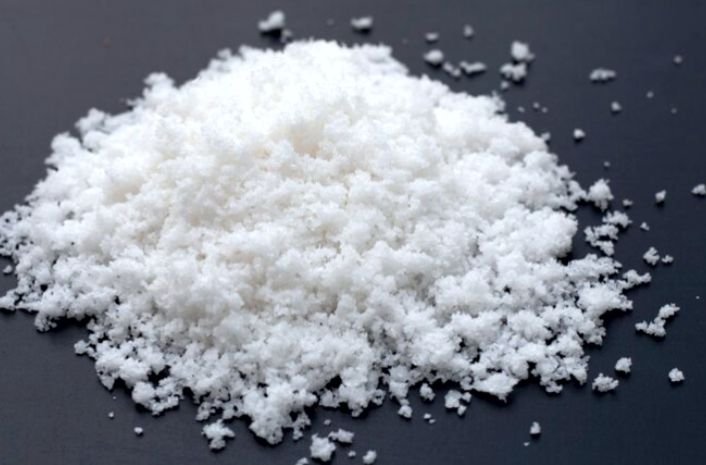
Palm oil stearic acid is a waxy, white saturated fatty acid made from palm oil in oleochemical plants. Palm oil holds only a little stearic acid naturally, so factories split and fully hydrogenate it to raise the yield. The finished acid goes into candles, bar soap, body creams, rubber goods and some foods.
Stearic acid is one of those palm products that my community in Ntigha has never seen by name.
Yet stearic acid sits in the candles, bar soaps and body creams sold in every Nigerian market, from Aba to Abuja.
Much of the world’s vegetable stearic acid now comes from palm oil, rather than from animal tallow as in the past.
In this post, you will learn about palm oil stearic acid, and how chemical factories make it from crude palm oil.
You will also understand where it is used, how to spot it on labels, and what safety research says about it.
Note: This page covers stearic acid alone, one of many palm-based chemicals. Dozens of other ingredients made from palm oil and palm kernel oil are listed in the full palm derivatives list.
Table of Contents
What Is Palm Oil Stearic Acid?
Stearic acid is a saturated fatty acid with 18 carbon atoms, known to chemists by the shorthand C18 with zero double bonds.
It forms hard, white, waxy flakes or beads at room temperature and melts at about 70 °C. Palm oil stearic acid is stearic acid made from palm oil or palm stearin rather than from animal fat.
Factories sell it as a raw material to candle makers, soap makers, cosmetic brands and rubber plants.
On labels it appears simply as stearic acid, with no mention of its palm source.
It belongs to the wider family of oleochemicals that factories build from palm oil, set out in palm oil in factories and industry.
How Much Stearic Acid Is in Palm Oil?
Palm oil itself is not rich in stearic acid, despite being a hard, saturated fat. Its main fatty acids are palmitic and oleic acids, with stearic acid only a small share.
| Fatty acid | Carbon chain | Share in palm oil |
|---|---|---|
| Palmitic acid | C16:0 | The largest share |
| Oleic acid | C18:1 | The second largest share |
| Linoleic acid | C18:2 | A modest share |
| Stearic acid | C18:0 | Only a few percent |
USDA FoodData Central lists the fatty acid breakdown for palm oil and other fats. Its records show stearic acid as a minor part of palm oil.
That is why factories cannot simply separate stearic acid from palm oil. They must change the oil chemically, through hydrogenation, to make more of it.
How Factories Make Stearic Acid From Palm Oil
The US Code of Federal Regulations describes food-grade stearic acid as made from hydrolyzed tallow or from hydrolyzed, completely hydrogenated vegetable oil. Palm oil is the vegetable oil that most stearic acid plants in Asia now use.
- Start with palm oil or stearin. Refined palm oil and its stearin, the solid fraction, feed the plant.
- Hydrogenate. Hydrogen gas and a catalyst turn unsaturated oleic and linoleic acids into saturated stearic acid.
- Split the fat. High-pressure steam breaks the fat into free fatty acids and glycerin.
- Distill and separate. The fatty acids are distilled, and stearic acid is separated from palmitic acid by crystallizing and pressing.
- Flake or bead. The purified acid is cooled into flakes or beads and bagged for sale.
The glycerin released in splitting becomes a product of its own, as set out in glycerin from the same plant.
Full hydrogenation is the key step that raises the stearic acid content of the fat. How hydrogenation changes palm fats is covered in what hydrogenation does to palm fats.
Before any of this, crude palm oil passes through a refinery, a cleaning stage described in how crude oil is refined.
Uses of Palm Oil Stearic Acid
Stearic acid is one of the most widely used fatty acids in industry.
| Use | What stearic acid does | Common products |
|---|---|---|
| Candles | Hardens wax, raises melting point, helps candles release from molds | Pillar and taper candles |
| Bar soap | Hardens bars and gives a creamy, stable lather | Bath soaps, shaving soaps |
| Creams and lotions | Thickens, stabilizes and helps oil and water mix | Body creams, face creams, deodorant sticks |
| Rubber | Activates curing during vulcanization | Tires, hoses, rubber goods |
| Plastics | Lubricates and stabilizes during processing | PVC pipes, films, molded parts |
| Food | Acts as a flavoring adjuvant and processing aid | Confectionery coatings, chewing gum bases |
| Pharmaceuticals | Lubricates tablet machines and binds tablets | Tablets and capsules |
In soap, stearic acid adds hardness to bars made from softer oils. Palm oil soap recipes and ratios are set out in making soap with palm fats.
In creams, stearic acid works alongside fatty alcohols and emulsifiers to give body and stability. Other palm ingredients in skincare, and how to spot them, sit in palm ingredients in skin care.
How to Spot Stearic Acid on Labels
A label rarely tells you where its stearic acid came from, because the same name covers palm, other plant oils and animal fat.
- Stearic acid. Can come from palm, other plant oils or tallow.
- Vegetable stearic acid. Plant-based, and most likely palm-derived in today’s market.
- Magnesium stearate and sodium stearate. Salts of stearic acid, from the same range of sources.
- Glyceryl stearate. An emulsifier made by joining stearic acid with glycerin, common in creams.
People who avoid animal products can look for vegan or vegetable labels. People who avoid palm need to ask the brand directly, since vegetable stearic acid is very likely palm.
Is Stearic Acid Safe?
Stearic acid is one of the best studied fatty acids, both as a food fat and as a cosmetic ingredient.
In Cosmetics
The Cosmetic Ingredient Review panel’s 1987 report assessed stearic acid with four other fatty acids. It concluded they are safe in present practices of use and concentration in cosmetics.
The panel found stearic acid was not a sensitizer, and it was nonirritating at high concentrations in clinical studies. Formulations with up to 13 percent of these acids were not irritants in its tests.
In Food
Stearic acid stands apart from other saturated fats in its effect on blood cholesterol. A 2005 meta-analysis in the journal Lipids found that stearic acid lowers LDL cholesterol compared with other saturated fatty acids.
The same review found stearic acid less cholesterol-raising than palmitic, myristic and lauric acids. Its effects on HDL cholesterol, the so-called good cholesterol, were inconsistent across studies.
That finding does not make high-stearic fats a health food for anyone. Health bodies still advise limiting total saturated fat, and palm oil’s main saturated fat is palmitic acid, not stearic acid.
How palm oil as a whole affects blood cholesterol is weighed in the cholesterol research on palm oil.
Palm Stearic Acid vs Tallow Stearic Acid
| Feature | Palm stearic acid | Tallow stearic acid |
|---|---|---|
| Source | Hydrogenated palm oil or stearin | Rendered animal fat |
| Suitable for vegans | Yes | No |
| Suitable for halal and kosher rules | Generally easier to certify | Depends on the animal and slaughter |
| Supply | Large and steady from Southeast Asia | Tied to meat production |
| Environmental concern | Linked to plantation expansion | Linked to livestock farming |
Brands that want animal-free products have largely moved to palm stearic acid. That switch is one reason palm derivatives are now found across so many products.
Conclusion
Palm oil stearic acid is a hard, waxy fatty acid made by hydrogenating and splitting palm oil.
Palm oil holds little stearic acid naturally, so factories convert its other fats to raise the yield.
It hardens candles and soap, thickens body creams, and helps make rubber, plastics and tablets.
Safety reviews find it safe in cosmetics, and research shows it raises LDL cholesterol less than other saturated fats.
Check product labels for stearic acid and its salts, and ask brands about their source whenever it matters to you.
Frequently Asked Questions
Is stearic acid made from palm oil?
Stearic acid can be made from palm oil, other vegetable oils or animal tallow. Most vegetable stearic acid sold today comes from hydrogenated palm oil or palm stearin.
What is palm oil stearic acid used for?
Palm oil stearic acid is used in candles, bar soap, creams, lotions and deodorants. Factories also use it in rubber tires, plastics, medicine tablets and some food coatings.
Is stearic acid safe for skin?
Yes, a Cosmetic Ingredient Review panel found stearic acid safe in cosmetics at normal levels. It was not a sensitizer and caused no irritation in its clinical studies.
Does stearic acid raise cholesterol?
A 2005 meta-analysis found stearic acid lowers LDL cholesterol compared with other saturated fats. Health bodies still advise limiting saturated fat overall, so moderation still applies to everyone.
Disclaimer. The health information on this page is general and does not replace advice from a doctor or dietitian. The author is not a registered dietitian, chemist or medical professional of any kind. Where research on dietary fats is mixed or contested, the article says so plainly. Talk to a qualified healthcare provider before making large changes to your diet.

Chimeremeze Emeh is a tropical crop farmer and chemical engineer from Ntigha, Isiala Ngwa North LGA, Abia State, Eastern Nigeria, specializing in palm oil and cassava, with over 30 years of hands-on experience growing, harvesting, and processing red palm oil. He runs community engagement workshops for rural farmers in Ntigha focused on palm tree care, and operates Palm Oil Pathway as a registered agribusiness and sells red palm oil in 1L, 2L, 3L, and 25L packaging. Built around red palm oil production. He is also the founder of Cassava Pathway, a CAMA-registered agribusiness founded in 2024, where he applies the same tropical farming expertise to cassava flour and starch production.