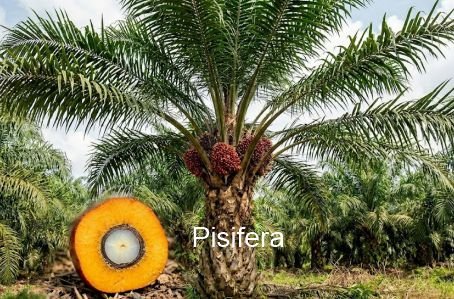
It produces no commercial oil, rarely bears viable fruit, and is never planted for direct harvest. Yet without the Pisifera palm tree, the modern palm oil industry would not exist.
The Pisifera oil palm tree is the most misunderstood variety in palm oil agriculture.
On the surface, it looks like a limitation, sterile, low-yielding, commercially unviable on its own.
But that surface reading misses the point entirely. Pisifera is not a production tree.
It is a breeding tree, and in that role it is irreplaceable.
Every Tenera hybrid planted on commercial plantations across Nigeria, Malaysia, Indonesia, and beyond carries Pisifera genetics.
Knowing what Pisifera is, why it cannot produce oil commercially, and why breeders depend on it is foundational knowledge for anyone going into oil palm farming.
The Tree I Never Saw Growing Up — and Why That Makes Sense
In all my years dealing with oil palms in Nigeria, I have never encountered a Pisifera tree in a smallholder grove.
That is not an accident. Pisifera does not seed itself naturally the way Dura does; it is not planted for harvest, and it does not produce the kind of fruit that communities process into oil.
It exists almost exclusively inside research stations and controlled seed gardens where its pollen is harvested and used to fertilize Dura female flowers.
The result of that cross is the Tenera seedling that commercial farmers buy and plant.
Pisifera’s contribution to palm oil is invisible at the farm level and fundamental at the industry level.
Table of Contents
What Is the Pisifera Oil Palm Tree?
The Pisifera palm tree, classified as Elaeis guineensis var. pisifera, is one of three naturally occurring varieties of the oil palm species alongside Dura and Tenera.
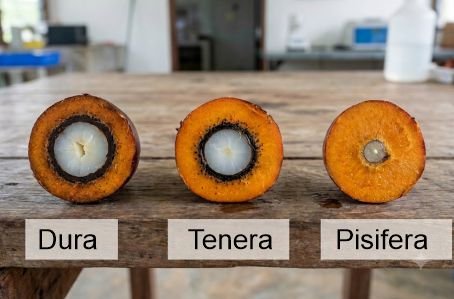
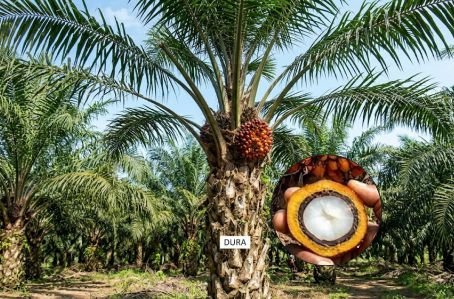
It is defined by a single structural characteristic: its fruit has no hard shell.
Where Dura fruit has a thick endocarp surrounding the kernel, Pisifera fruit has none.
This absence of a shell means the fruit is almost entirely mesocarp, which sounds like an advantage for oil extraction but creates a different problem entirely.
Most Pisifera palms are female-sterile, meaning they cannot produce viable seeds in commercial quantities.
That sterility is what prevents Pisifera from being a production tree and what makes its role in breeding the only context in which it delivers real value.
Physical Characteristics of the Pisifera Palm
Fruit Structure
The Pisifera fruit has no endocarp shell, the hard layer that surrounds the kernel in Dura and Tenera varieties is completely absent.
What remains is a large mesocarp surrounding a small, often undeveloped kernel.
The fruit is soft, poorly formed, and rarely viable for seed production.
This structural difference is controlled by a single gene, which is why crossing Pisifera with Dura produces Tenera offspring with a predictably thin shell rather than no shell or a thick one.
Growth and Physical Appearance
Pisifera palms grow to similar heights as other oil palm varieties, between 15 and 20 meters at maturity, with the same pinnate frond structure and general appearance.
Without examining the fruit directly, a Pisifera tree in a plantation setting looks identical to a Dura or Tenera tree.
The distinction lives entirely in the fruit, and since Pisifera rarely produces viable fruit in commercial quantities, the visual difference is rarely apparent in the field.
Fertility and Fruit Set
Female sterility is the defining agricultural characteristic of Pisifera.
Most Pisifera palms either fail to produce fruit or produce fruit that does not develop viable seeds.
This is not a disease or a management failure; it is a genetic trait of the variety.
In breeding programs, this sterility is managed by using Pisifera strictly as the pollen donor, the male parent, rather than the seed-bearing female parent. The Dura palm fills that female role.
Why Pisifera Cannot Produce Oil Commercially
The combination of female sterility and poor fruit set makes Pisifera commercially unviable as a direct production tree.
A plantation of Pisifera palms would yield almost no harvestable fruit and therefore almost no oil.
Even in the rare cases where Pisifera palms do produce fruit, the absence of a shell creates handling and extraction problems that standard palm oil mills are not designed for.
This is why you will never see a commercial palm oil farmer planting Pisifera for harvest.
Its value is entirely upstream, in the breeding station, not the plantation.
The oil it indirectly produces, through the Tenera offspring it fathers, is measured in millions of tonnes annually across global plantations.
But none of that oil comes from Pisifera fruit directly.
Pisifera’s Role in Hybrid Breeding
This is the section that matters most for understanding why Pisifera exists in palm oil agriculture.
The Dura × Pisifera Cross
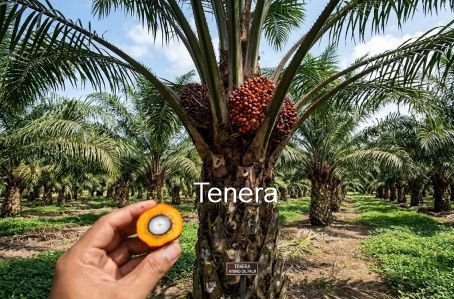
When pollen from a selected Pisifera male is transferred to the female flowers of a selected Dura palm under controlled conditions, the resulting seeds produce Tenera offspring.
Tenera inherits a thin shell from the interaction of Dura and Pisifera genetics, specifically from the shell gene that Pisifera contributes in its recessive form.
The result is a fruit with a thin shell, a thick mesocarp, and oil extraction rates that can exceed 25 percent by fresh fruit weight.
That is the commercial sweet spot that Dura alone cannot reach and that Pisifera alone cannot produce.
Pollen Collection and Controlled Pollination
In seed gardens and research stations, Pisifera palms are maintained specifically for pollen collection during their male flowering phase.
Pollen is harvested, stored under controlled conditions, and used precisely when Dura female flowers are receptive.
The timing and quality of this process directly determine the quality of Tenera seeds produced.
Elite Pisifera lines, those that consistently contribute the best traits to their Tenera offspring, are carefully documented, maintained, and replicated across breeding programs.
Genetic Contribution to Tenera Quality
Not all Pisifera lines contribute equally to Tenera hybrid quality.
Breeders select Pisifera parents based on their documented contribution to offspring oil yield, bunch weight, disease resistance, and growth consistency.
A poorly selected Pisifera parent can reduce hybrid performance significantly.
This is why maintaining pure, well-documented Pisifera lines is treated as seriously as selecting Dura parents.
The quality of the Tenera seedlings that commercial farmers plant depends equally on the quality of both parents.
Dura vs Pisifera vs Tenera
| Feature | Dura | Pisifera | Tenera |
|---|---|---|---|
| Shell thickness | Thick 2-8mm | None | Thin 0.5-4mm |
| Mesocarp content | Lower | Higher | Highest |
| Oil yield | 15-24% | Not viable | 25%+ |
| Fertility | High | Low/sterile | High |
| Commercial use | Limited direct | Breeding only | Primary production |
| Role in breeding | Female parent | Male parent | Commercial offspring |
Cultivation and Management in Breeding Programs
Pisifera palms are not managed like production palms. Their cultivation is entirely oriented around pollen quality and availability rather than fruit harvest.
In seed gardens, Pisifera palms are planted at controlled spacing alongside Dura palms, with careful isolation from uncontrolled pollen sources that could contaminate crosses.
Regular monitoring of male inflorescence development allows breeders to time pollen collection precisely.
Harvested pollen is dried, tested for viability, and stored at low temperatures until needed for controlled pollination of Dura female flowers.
Field management includes standard soil nutrition, pest monitoring, and irrigation where needed, not to maximize fruit production but to maintain healthy, consistent male flowering across the Pisifera population.
A Pisifera palm that does not flower reliably is a gap in the breeding program.
Challenges and Limitations
- Female Sterility: The same sterility that makes Pisifera valuable as a male parent limits its flexibility. It cannot serve as the female parent in any cross, which constrains breeding program design.
- Limited Genetic Lines: Elite Pisifera lines are relatively few and carefully guarded. Access to proven high-performing Pisifera genetics is controlled by major research institutions, limiting what independent breeders can work with.
- Environmental Sensitivity: Pisifera palms can be more sensitive to drought and poor soil conditions than Dura or Tenera, requiring more careful site selection and management in breeding stations.
- Misconception About Value: Many smallholder farmers and new entrants to palm oil farming have never heard of Pisifera. Its invisibility at the farm level means its contribution to the industry is consistently underestimated by the people whose livelihoods depend most directly on Tenera hybrid productivity.
Conclusion
The Pisifera oil palm tree is proof that value in agriculture does not always look like a full harvest.
It produces no commercial oil, occupies space in controlled breeding stations rather than open plantations, and is largely invisible to the smallholder farmers whose Tenera trees carry its genetics.
But without Pisifera, there is no Tenera.
Without Tenera, commercial palm oil production as it currently operates would not be possible.
For palm oil farmers, breeders, and anyone building a serious understanding of this industry, Pisifera deserves more attention than it typically gets.
Frequently Asked Questions
What is the Pisifera oil palm tree?
The Pisifera is a shell-less, largely sterile oil palm variety used exclusively as the male parent in breeding programs that produce high-yielding Tenera hybrids.
Why can’t Pisifera produce oil commercially?
Female sterility prevents Pisifera from producing viable fruit in commercial quantities, making it unsuitable for direct harvest and oil extraction at any production scale.
What is the role of Pisifera in palm oil breeding?
Pisifera provides pollen used to fertilize Dura female flowers, producing Tenera offspring with thin shells, thick mesocarp, and superior oil extraction rates above 25 percent.
How is Pisifera different from Dura and Tenera palms?
Pisifera has no shell and is largely sterile. Dura has a thick shell and high fertility. Tenera is the fertile hybrid between them with the highest commercial oil yield.
Is Pisifera ever planted on commercial plantations?
No. Pisifera is planted only in controlled seed gardens and research stations where its pollen is harvested for breeding. It has no role in direct commercial oil production.

Chimeremeze Emeh is a tropical crop farmer and chemical engineer from Ntigha, Isiala Ngwa North LGA, Abia State, Eastern Nigeria, specializing in palm oil and cassava, with over 30 years of hands-on experience growing, harvesting, and processing red palm oil. He runs community engagement workshops for rural farmers in Ntigha focused on palm tree care, and operates Palm Oil Pathway as a registered agribusiness and sells red palm oil in 1L, 2L, 3L, and 25L packaging. Built around red palm oil production. He is also the founder of Cassava Pathway, a CAMA-registered agribusiness founded in 2024, where he applies the same tropical farming expertise to cassava flour and starch production.