Thick-shelled, lower-yielding, and often overlooked, yet without the Dura palm tree, the commercial palm oil industry as we know it would not exist.
The Dura palm tree is not the variety you see dominating commercial plantations.
It does not produce the highest oil yield, and most large-scale growers deliberately choose other varieties when planting for profit.
But understanding Dura is not optional for anyone serious about palm oil farming.
It is the genetic parent behind the Tenera hybrid that powers the global palm oil industry, and in communities like mine in Abia State, South-Eastern Nigeria, it is the variety most smallholder farmers have been harvesting for generations without ever knowing its name.
Table of Contents
Why a Palm Oil Farmer From Abia State Knows Dura Better Than Most
The palm trees my father inherited from his own father were never selected, never planted with intention.
They seeded themselves across our land the way palm trees do in South-Eastern Nigeria, wherever a fruit fell and conditions allowed.
For as long as I have lived, we have harvested them, processed the oil, and sold it at local markets without questioning why our yield felt lower than what larger operations were producing.
The answer, which I only understood as an adult farmer, was simple.
Those inherited trees were Dura. Not the high-yielding Tenera hybrid that commercial plantations run on, but the original, thick-shelled variety that West African communities have lived with for generations.
That background is why I can write about Dura not just from research but from years of working with these trees directly.
What Is the Dura Palm Tree?
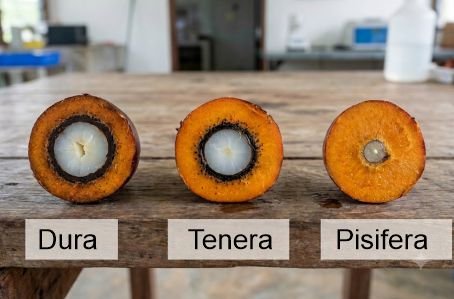
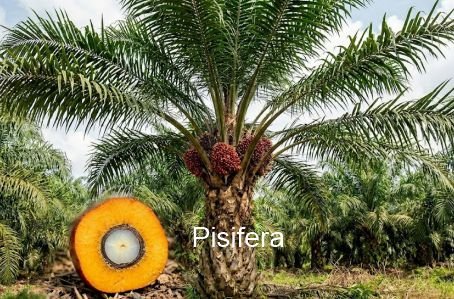
The Dura palm tree, scientifically classified as Elaeis guineensis var. dura, is one of three naturally occurring varieties of the oil palm species alongside Pisifera and Tenera.
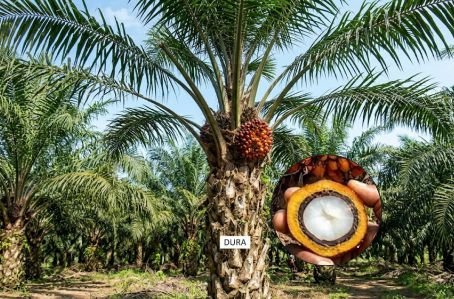
It is defined by its fruit structure, specifically, a thick, hard endocarp shell that surrounds the kernel and reduces the proportion of oil-rich mesocarp flesh.
This structural characteristic is what limits Dura’s oil yield compared to Tenera and what makes it commercially less attractive for direct cultivation.
Despite that limitation, Dura remains one of the most important trees in palm oil agriculture because of its indispensable role in hybrid breeding.
Physical and Agricultural Features of the Dura Palm Tree
Thick Shell and Fruit Structure
The defining feature of the Dura palm is its fruit. The endocarp, the hard shell surrounding the kernel, is thick, typically between 2 and 8 millimeters.
This reduces the mesocarp, the fleshy outer layer where palm oil is stored, to a smaller proportion of the total fruit weight.
In practical terms, this means less oil per fruit and lower extraction efficiency at the mill.
When I look at fruit from the inherited Dura trees on my family land and compare it to Tenera fruit from newer plantings, the difference in shell thickness and flesh depth is visible without any measurement tool.
Growth Habit and Climate Adaptation
Mature Dura palms reach between 14 and 20 meters in height, forming a tall, straight trunk with a dense crown of fronds.
They are strong, hardy trees that adapt well across a range of tropical conditions, from sandy loam to clay soils, provided drainage and basic nutrient management are handled.
In Eastern Nigeria, Dura trees grow with minimal intervention, which is precisely why they spread naturally across smallholder farmland for generations.
They do not need much to survive. Getting them to produce optimally is a different matter.
Yield Cycle and Plantation Management
Fruit production typically begins three to four years after planting, with peak yields arriving between years seven and ten.
Output is heavily influenced by rainfall consistency, fertilizer application, planting density, and pest management.
Harvesting requires skilled labor because fresh fruit bunches grow tightly at the crown of tall mature trees, something contracted harvesters in my community manage with raffia ropes and machetes, climbing heights that would make most people uncomfortable.
Oil Yield and Economic Value of the Dura Palm
Oil-to-Bunch Ratio and Extraction Rates
Dura palms typically yield between 15 and 24 percent oil by fresh fruit weight.
That compares unfavorably with Tenera, which regularly exceeds 25 percent and can reach significantly higher with good management.
The thick shell that reduces mesocarp content is the direct cause of this gap.
At the mill, this means more fruit input is required to produce the same volume of crude palm oil, which increases processing costs and reduces margin per hectare.
For smallholder farmers in communities like mine who have been working Dura trees without realizing it, this yield gap is the single biggest drag on income that most have never been able to name or explain.
Profit Margins and Plantation Decisions
The economics of Dura cultivation for direct commercial production are difficult to justify when Tenera is available.
Lower oil yield per bunch, combined with the same labor, fertilizer, and milling costs, compresses profit margins significantly.
This is why most serious commercial growers in West Africa and Southeast Asia shifted to Tenera decades ago.
The inherited Dura groves that still exist across smallholder farms in South-Eastern Nigeria represent both a cultural heritage and a productivity ceiling that better variety selection could lift considerably.
Role in Hybrid Breeding: Dura × Pisifera = Tenera
This is where Dura’s true value is, not in direct oil production but in its role as the female parent in producing the Tenera hybrid that dominates commercial palm oil farming globally.
Controlled Pollination and Parent Selection
In formal breeding programs, pollen from Pisifera palms is transferred to selected Dura female flowers under controlled conditions.
The Dura parent contributes genetic stability, bunch weight potential, and field hardiness.
Careful selection of Dura parent lines allows breeders to target specific traits in the resulting Tenera offspring, oil content, disease tolerance, bunch weight, and growth consistency across different plantation environments.
Seed Processing and Nursery Development
After fertilization, harvested seeds go through germination chambers before entering nurseries.
Controlled heat and moisture trigger sprouting, and well-managed nursery conditions produce uniform seedlings ready for large-scale field planting.
The quality of Dura parent stock directly determines the quality of Tenera seeds produced, which is why maintaining pure, well-documented Dura lines is taken seriously at research stations across Nigeria, Malaysia, and Indonesia.
Tenera Performance and Market Value
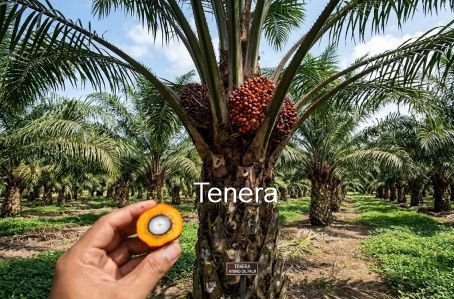
The Tenera produced from Dura × Pisifera crosses has a thinner shell, thicker mesocarp, and oil extraction rates that can exceed 25 percent.
That improvement in yield per hectare is what makes the entire global palm oil supply chain viable at its current scale.
Every high-yielding Tenera seedling planted on a commercial plantation today carries Dura genetics.
The tree that smallholder farmers in South-Eastern Nigeria have harvested for generations without selection is quietly anchoring the productivity of the world’s most important oil crop.
Dura Palm Cultivation Today
Key Growing Regions and Research Focus
Dura palms are actively maintained in West Africa, Southeast Asia, and parts of South America, primarily at research stations and seed production facilities rather than commercial plantations.
Nigeria, Malaysia, and Indonesia host controlled Dura fields where pure lines are preserved for breeding programs.
In West Africa, traditional smallholder farms continue to hold significant Dura populations simply because those trees were never replaced with improved varieties.
Maintaining Pure Lines for Hybrid Seeds
The value of Dura in modern palm oil agriculture depends entirely on the integrity of its pure lines.
Controlled pollination, field isolation, and precise record keeping protect the genetic consistency that makes Dura reliable as a breeding parent.
A Dura line with documented bunch weight, disease tolerance, and stable fruit set produces consistently better Tenera offspring than an uncharacterized population harvested from old smallholder groves.
Sustainable Field Management Practices
Where Dura palms are still actively farmed, either for breeding or in traditional smallholder settings, integrated pest management, soil testing, and targeted fertilization protect both yield and soil health.
In communities across South-Eastern Nigeria where Dura trees have grown for generations on inherited land, the trees themselves are often healthier than intensively managed plantation crops because they have adapted to local soil and climate conditions over generations.
Conclusion
The Dura palm tree will not win any awards for oil yield. It is not the variety a commercial farmer chooses when planting a new hectare for profit.
But it is the tree that made modern palm oil production possible.
Its genetics anchor every Tenera hybrid in every commercial plantation on earth.
In communities across South-Eastern Nigeria, it is the tree that fed my community, made my ancestors healthy, and built rural economies for generations before anyone understood what variety it was.
Knowing Dura, its structure, its limitations, its breeding role, and its place in the communities where it grows naturally is foundational knowledge for anyone serious about palm oil farming.
Frequently Asked Questions
What makes the Dura palm different from other oil palm varieties?
The Dura palm has a thick shell surrounding the kernel that reduces mesocarp content, producing less oil per fruit than Tenera hybrids used in commercial production.
Why is Dura important in hybrid seed production?
Dura provides the female parent lines crossed with Pisifera to produce Tenera seeds, which deliver higher oil yield and better plantation productivity globally.
Does Dura palm produce high oil yields?
Dura palms yield between 15 and 24 percent oil by fresh fruit weight, significantly lower than Tenera hybrids, which regularly exceed 25 percent extraction rates.
Where is Dura palm mainly cultivated today?
Dura palms are maintained in West Africa, Southeast Asia, and South America primarily for breeding programs and genetic conservation rather than direct commercial oil production.
Why do many smallholder farms in West Africa still have Dura palms?
Dura trees spread naturally across West African farmland for generations before improved varieties existed. Most smallholder groves were never replanted with higher-yielding Tenera hybrids.


Chimeremeze Emeh is a tropical crop farmer and chemical engineer from Ntigha, Isiala Ngwa North LGA, Abia State, Eastern Nigeria, specializing in palm oil and cassava, with over 30 years of hands-on experience growing, harvesting, and processing red palm oil. He runs community engagement workshops for rural farmers in Ntigha focused on palm tree care, and operates Palm Oil Pathway as a registered agribusiness and sells red palm oil in 1L, 2L, 3L, and 25L packaging. Built around red palm oil production. He is also the founder of Cassava Pathway, a CAMA-registered agribusiness founded in 2024, where he applies the same tropical farming expertise to cassava flour and starch production.