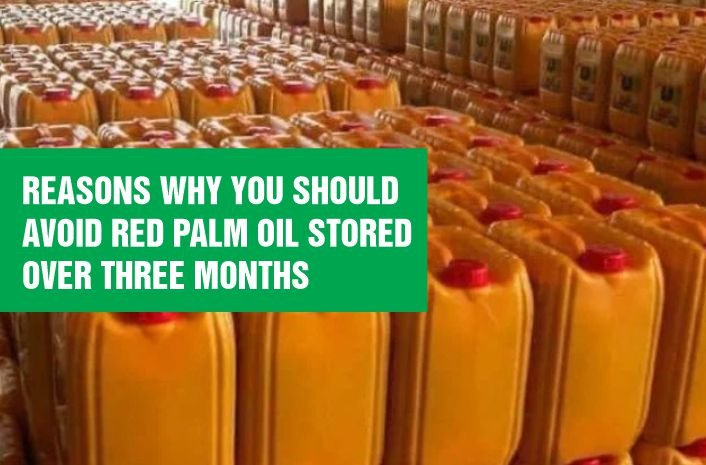
Here is why red palm oil should not be stored for more than three months to preserve nutrients and prevent rancid toxin formation that may be harmful to consumers.
As someone who has been producing and processing red palm oil since childhood, I have seen enough of red palm oil, from harvesting to stripping, up to extraction.
My dad used to store numerous gallons of red palm oil after processing, waiting for when the price would go up, so we can make more profit.
Sometimes, for some reasons you are going to read here, some of the palm oils got bad: some caked, changed color, or outright rotted.
This practical experience informed my knowledge of why red palm oil should not be stored for more than three months.
Red palm oil may look stable on the shelf, but storage time affects its quality, taste, and safety, which might not be noticeable to the senses.
Keeping it beyond three months can lead to changes in color, smell, and texture, especially in Nigeria’s warm climate.
Heat, light, and air exposure speed up oxidation, which reduces freshness and nutritional value.
Also, careless handling by producers and traders contaminates it and makes it prone to degradation.
Free fatty acid levels can rise, making the oil taste sour and less suitable for cooking. Poor storage conditions also increase the risk of contamination.
Limiting storage to three months or less helps you maintain quality, protect your health, and avoid waste in your kitchen or business.
Here are some of the reasons why you should sell, or use your red palm oil in a space of three months to avoid wastage.
Table of Contents
Water Content Speeds Up Red Palm Oil Spoilage
The number one reason why red palm oil should not be stored beyond three months is due to the water content.
When processing red palm oil, water is one of the components introduced at some point, as it makes the oil rise so it can be scooped.
While some local producers make sure the water content is reduced to the barest minimum, some don’t care and do not know the implications.
Water left in red palm oil after extraction can shorten its shelf life quickly.
In many traditional processing methods, complete moisture removal does not always happen.
Even small traces of water trapped inside the oil create the right condition for hydrolysis, a chemical reaction that breaks down triglycerides into free fatty acids.
As free fatty acid levels rise, the oil develops a sour smell and sharp taste, reducing its cooking quality and market value.
Moisture also encourages microbial activity, especially when storage containers are not tightly sealed.
Bacteria and molds thrive in warm environments, accelerating spoilage. Once these reactions begin, freshness drops faster than expected.
Limiting storage to three months reduces the risk of quality loss caused by hidden water content.
Related Posts
How Much is Red Palm Oil in Nigeria?
How to Spot Original Red Palm Oil in Nigeria
How to Use Red Palm Oil for Cooking
Oxidation Exposure to Air Is a Major Deterioration Factor
Another reason why red palm oil should not be kept for over three months is exposure to air.
Exposure to air is one of the fastest ways red palm oil loses quality. When oil is stored in poorly sealed containers, oxygen reacts with its natural fats.
This reaction, known as oxidation, breaks down the oil’s structure and weakens its freshness. As oxidation progresses, the oil develops off-flavors and unpleasant odors that affect taste and cooking performance.
Color may also fade from deep red to a dull shade, signaling nutrient loss, especially carotenoids and vitamin content.
Warm temperatures speed up this chemical process, making open storage even riskier.
Once oxidation starts, deterioration continues steadily. Limiting air exposure and avoiding long storage beyond three months helps preserve flavor, aroma, and nutritional value.
Heat Accelerates Rancidity
Yes! Temperature is not that friendly with red palm oil, especially when it is closed.
High ambient temperatures, common in many Nigerian markets and storage rooms, speed up the breakdown of red palm oil.
Heat increases the rate of oxidation, causing fats to react faster with oxygen.
As temperatures rise, chemical reactions inside the oil move more quickly, forming rancid compounds that affect taste, smell, and safety.
Even when containers are sealed, constant exposure to warmth can reduce shelf life.
The oil may develop a bitter flavor, sharp odor, or slightly thick texture. Nutrient quality also declines as heat damages sensitive compounds.
Storing red palm oil for more than three months in hot conditions increases the risk of spoilage.
Keeping it in a cool, shaded place helps slow rancidity and preserve freshness.
Sunlight and Light Exposure Break Down Quality
Direct sunlight and strong indoor lighting can reduce the quality of red palm oil faster than expected.
Light energy breaks down sensitive compounds such as carotenoids and natural antioxidants that give the oil its deep red color and nutritional value.
As these compounds degrade, the oil loses stability and becomes more vulnerable to oxidation.
Oil displayed in open market stalls or placed near windows receives continuous light exposure.
This accelerates chemical reactions that affect flavor, aroma, and shelf life. Fading color, dull appearance, and weaker taste signal declining quality.
Long storage beyond three months in bright conditions increases spoilage risk.
Keeping containers in dark, covered storage areas helps preserve freshness and maintain value.
Containers Matter: Plastic and Dirt Introduce Problems
Storage containers play a direct role in how long red palm oil remains fresh.
Recycled plastic, poorly washed kegs, or open buckets can introduce moisture, dust, and foreign particles into the oil.
Once contamination enters, chemical and microbial reactions begin to develop inside the container.
Moisture trapped in dirty containers promotes fermentation, which raises free fatty acid levels and creates sour or unpleasant smells.
Exposure to air through loose covers also speeds up oxidation. Plastic that is not food-grade may react with heat, affecting oil quality further.
Using clean, dry, tightly sealed containers reduces contamination risk and helps maintain freshness within a safe storage period of three months.
Rising Free Fatty Acids FFA Signal Degradation
Free fatty acids, known as FFA, increase as red palm oil breaks down during storage.
After about three months, especially in warm conditions, natural fats begin to split due to moisture, heat, and oxidation.
This chemical change raises FFA levels, which signal declining quality.
Higher FFA affects taste, giving the oil a sharp, sour flavor that reduces cooking performance.
Market value also drops because buyers and processors check FFA as a quality standard.
Elevated levels may irritate the stomach when consumed in large amounts. Once FFA begins to rise steadily, freshness continues to decline.
Limiting storage time helps maintain acceptable FFA levels and preserves both value and safety.
Peroxide Formation Signals Oxidative Damage
Peroxides form when red palm oil reacts with oxygen during storage.
These compounds are early indicators of oxidative damage and signal the start of rancidity.
As the oil sits for long periods, especially beyond three months, peroxide values gradually increase.
Rising peroxide levels mean the fats are breaking down, even if strong off-odors have not yet appeared.
Flavor becomes flat, then slightly bitter as oxidation progresses. Nutritional quality also declines as natural antioxidants weaken.
Once peroxide formation begins, deterioration continues unless storage conditions improve.
Monitoring storage time and limiting exposure to air and heat help keep peroxide levels low and maintain freshness.
Longer Storage Reduces Market Value
Market value drops when red palm oil stays in storage too long. Buyers judge quality by deep red color, fresh aroma, and clean taste.
Once storage extends beyond three months, visible and sensory changes begin to appear.
Color may fade from bright red to a dull shade as carotenoids break down.
Aroma weakens or turns slightly sharp due to oxidation and rising free fatty acids. Taste can become flat or sour, making customers hesitant to buy.
Traders face price reductions when oil looks aged or smells off. Slower sales also increase holding costs and storage risks.
Keeping turnover within three months protects product appeal, maintains competitive pricing, and preserves buyer confidence.
Risk of Consumer Complaints and Returned Stock
Extended storage increases the chance of customer dissatisfaction.
When red palm oil degrades, off-odors and unpleasant flavors become noticeable during cooking.
Meals may develop a sharp smell or slightly bitter taste, even if the oil looked fine at first glance.
Negative cooking results quickly affect customer trust. Buyers may return stock, request refunds, or switch to another supplier.
For traders and retailers, returned goods mean financial loss and damaged reputation in competitive markets.
Word spreads fast in local communities, especially where quality matters.
Limiting storage to three months reduces complaints, protects brand image, and keeps repeat customers confident in your product.
If you sell or use red palm oil, check your stock every 3 months to ensure quality and safety.
Conclusion
Storing red palm oil beyond three months exposes it to multiple risks that reduce quality, safety, and value.
Moisture, heat, light, and air accelerate oxidation and rancidity, while rising free fatty acids and peroxides signal chemical breakdown.
Poor containers and handling add contamination, leading to off-odors, sour taste, and faster spoilage.
Extended storage affects color, aroma, and cooking performance, which can reduce market appeal and invite customer complaints or returned stock.
Limiting storage to three months preserves freshness, nutrients, and shelf appeal, protecting both consumers and your business.
Keeping turnover frequent ensures safe, high-quality red palm oil that maintains trust and value in the market.
Frequently Asked Questions
Why should red palm oil not be stored beyond three months?
Storage beyond three months increases oxidation, microbial growth, and free fatty acids, reducing freshness, nutritional value, and safety for consumers.
How does water content affect storage life?
Even small traces of water promote hydrolysis and microbial activity, raising free fatty acids and accelerating spoilage, making long storage unsafe.
Can improper containers cause spoilage?
Yes, dirty, recycled, or open containers introduce moisture and contaminants, which encourage fermentation, off-odors, and faster degradation of red palm oil.
What role do light and heat play in oil quality?
Exposure to sunlight, bright light, and high temperatures speeds oxidation, breaks down nutrients, dulls color, and reduces taste, shortening the oil’s shelf life.
References

I am Chimeremeze, a writer and researcher with deep-rooted experience in processing, consuming, and utilizing locally produced palm oil products, including red palm oil, palm kernel oil, and refined palm oil. Growing up in a community surrounded by towering palm trees, we embraced every part of this nature’s gift—drinking its wine, using the fronds for fencing, crafting brooms from its leaves, and turning its sturdy trunks into communal benches.
My passion for the palm tree and its countless benefits drives my research and writing, shedding light on its significance to West Africa and beyond. I also write on cassavavaluechain.com on the impact of cassava, another staple crop that has shaped Africa and influenced the world.