Learn how to identify pure red palm oil in Nigeria and avoid costly adulteration that might hurt your health with simple expert backed practical tips.
Identifying pure red palm oil in Nigeria is not just a market question; it’s a kitchen survival skill.
If you’ve ever bought palm oil that looked bright but tasted flat, smelled strange, or weirdly stained your pot, you already know the frustration.
In Nigeria, where red palm oil is part of daily cooking, knowing the difference between pure, fresh oil and diluted or chemically enhanced versions protects your health and your money.
Good oil has character. It smells alive. It tastes rich. Once you understand what to look for, nobody can trick you at the market again.
If you are in Abuja, order your carefully produced and unstored red palm oil here.
Table of Contents
Why Fake or Adulterated Palm Oil Is Common in Nigeria
Red palm oil is a daily commodity in Nigerian homes. High demand, weak regulation, and quick profit opportunities create room for adulterated palm oil to circulate in many markets.
High Demand Across Cities Like Abuja and Lagos
Busy cities consume large quantities of red palm oil every day. Restaurants, bukas, and families buy in bulk for soups, stews, and frying.
When demand rises faster than supply, some sellers cut corners.
Scarcity pushes prices up, prompting buyers to seek cheaper options, creating room for diluted palm oil to enter the market unnoticed.
Common Adulteration Methods, Dyes, Sudan IV, Mixing With Other Oils
Some traders mix palm oil with cheaper vegetable oil to increase volume.
Others add artificial dyes to deepen the red color and make it look fresh.
Harmful substances like Sudan IV, a chemical dye banned for food use, may also appear. Bright color alone does not mean purity.
Profit Motives Behind Dilution
More volume means more money. Mixing ten liters of pure red palm oil with cheaper oil can double profit with little effort.
Quick gains tempt dishonest sellers, especially in crowded markets.
Without strict testing, adulterated palm oil spreads easily, leaving you to detect quality with your senses and knowledge.
Ways to Identify Pure Red Palm Oil in Nigeria
Buying red palm oil in Nigeria requires sharp eyes and simple tests. These practical checks help you spot pure palm oil, avoid adulterated oil, and protect your health.
Check the Color
The red palm oil color is the first thing you notice, even from a distance.
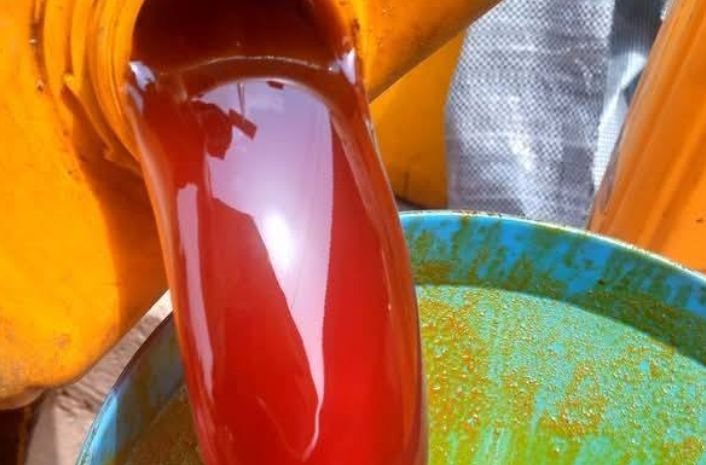
Color gives the first clue. Pure red palm oil ranges from bright natural red to deep orange, depending on processing and palm fruit quality.
The tone looks rich, not neon or artificially glowing. Extremely bright red may signal added dye. Natural oil reflects light softly, or what you can call glossy, not like paint.
Smell the Aroma
The smell is my sure way of identifying pure red palm oil. This is due to many years of producing red palm oil.
If the unmistakable aroma of the oil is not there, then it is not pure.
Bring the oil close and inhale gently. Fresh palm oil has a mild, nutty scent with a warm, earthy note.
No harsh chemical smell should hit your nose, nor a foul smell.
A sharp or strange odor can mean contamination, poor storage, or added substances. Your nose works better than any label.
Taste Test
Place a small drop on your tongue. Pure red palm oil tastes slightly sweet and earthy, with a smooth finish.
Bitterness, metallic flavor, or chemical taste signals a problem. Rinse your mouth after testing.
That quick check can save you from buying low-quality or adulterated palm oil.
Texture and Thickness
Dip a clean spoon into the oil and lift it slowly. Pure palm oil feels moderately thick at room temperature, not watery or runny.
Excessively thin oil may be mixed with vegetable oil. A very heavy, sticky texture may point to poor processing. Balance is the goal.
Sediment Test
Let the oil sit undisturbed in a transparent bottle. Small natural particles may settle at the bottom, especially in traditionally processed palm oil.
That can be normal. Large amounts of residue, dirt, or cloudy layers suggest poor filtration or contamination during palm oil production.
Cold Temperature Test
Pour a little into a small container and refrigerate it. Pure red palm oil solidifies evenly when cold, forming a smooth, semi-solid texture.
Mixed oils separate or solidify unevenly. Uniform thickening shows higher purity and natural palm fruit oil content without dilution.
Paper Absorption Test
Drop a small amount on clean white paper and wait. Pure palm oil leaves a bold orange stain that spreads slowly and evenly.
If a lighter outer ring forms around the stain, mixed oils may be present.
Clear separation usually signals dilution with refined vegetable oil.
Related Posts
Tips for Cooking with Red Palm Oil
Organic Red Palm Oil: What is it?
Health Benefits Red Palm Oil Offers
How to Identify Fake or Adulterated Palm Oil
Fake or adulterated palm oil can look attractive at first glance. Simple visual checks, smell tests, texture checks, and home methods help you detect diluted palm oil before it enters your kitchen.
Artificial Bright Red Color
Extremely bright red palm oil that looks neon or paint-like should raise concern.
Natural red palm oil ranges from deep orange to rich red, not glowing scarlet. Added dyes can create an unnatural shine.
Compare it with trusted pure palm oil and notice the difference immediately.
Chemical Smell
Bring the container close and inhale gently. A sharp, chemical, or plastic-like smell signals possible contamination or added colorants.
Pure palm oil carries a mild, nutty, earthy aroma. If the scent feels harsh or irritating to your nose, walk away without second thoughts.
Watery Texture
Tilt the bottle and observe how the oil flows. Adulterated palm oil mixed with vegetable oil feels thin and runny.
Pure red palm oil has moderate thickness at room temperature. Excessively light texture usually means dilution, especially when the oil spreads too quickly.
Uneven Solidification
Place a small quantity in the refrigerator and watch how it reacts. Fake or mixed palm oil may separate into layers or harden unevenly.
Pure palm fruit oil solidifies smoothly and consistently. Visible separation suggests the presence of other refined oils.
Oily Ring on Paper
Drop a small amount on clean white paper and leave it for a few minutes.
If a lighter, greasy outer ring forms around the main stain, mixing is likely.
Pure red palm oil stains evenly without clear separation between layers of oil.
How to Avoid Buying Fake Palm Oil in Nigeria
Avoiding fake palm oil starts before money leaves your hand. Smart buying habits, simple questions, and careful inspection help you choose pure red palm oil and avoid adulterated products.
Buy From Trusted Farmers or Verified Suppliers
Source your red palm oil from known farmers, cooperatives, or verified palm oil suppliers.
Markets in Nigeria have trusted sellers with steady reputations. Consistency builds trust.
Ask friends, family, or restaurant owners where they buy quality palm oil. Reliable sources reduce the risk of adulterated oil.
Ask About Production Method
Start a simple conversation with the seller. Ask how the palm fruits were processed, boiled, pressed, and stored.
Traditional methods usually produce thick, rich palm oil with natural sediment.
Vague answers or defensive reactions can raise concern. Clear details show confidence in product quality.
Avoid Overly Cheap Prices
Very low prices should trigger caution. Pure red palm oil requires labor, fresh palm fruit, and proper processing.
When the price looks far below market rate, dilution with vegetable oil or chemical dyes may be involved. Fair pricing protects both quality and your health.
Check Packaging and Storage Conditions
Look closely at how the oil is stored. Clean bottles, covered containers, and shaded areas help maintain freshness.
Dirty kegs, open buckets, or exposure to direct sunlight affect palm oil quality.
Good storage prevents contamination, rancidity, and chemical changes that reduce nutritional value.
Where to Buy Pure Red Palm Oil in Nigeria
Finding pure red palm oil in Nigeria depends on where and how you buy.
The right source protects your money, your meals, and your health from adulterated palm oil.
Local Markets vs Direct-From-Farm Suppliers
Local markets give you access to many palm oil sellers in one place, making price comparison easy.
Direct-from-farm suppliers offer better traceability and freshness. Buying straight from palm fruit processors reduces middlemen interference.
Fewer hands involved means lower risk of dilution with vegetable oil or chemical dyes.
Benefits of Buying From Transparent Brands
Transparent palm oil brands share details about sourcing, processing methods, and storage.
Clear labeling, batch information, and contact details show accountability. Some even explain how their red palm oil is filtered and packaged.
Openness builds trust and reduces the chance of buying adulterated or low-quality oil.
Tips for Online Purchases
Online palm oil purchases require extra caution. Check reviews, ratings, and customer photos before paying.
Confirm return policies and seller contact information. Avoid listings with unclear images or vague descriptions.
Ask direct questions about production and storage. Good sellers respond clearly and confidently.
If you live in Abuja, order your palm oil from here.
Conclusion
Pure red palm oil adds depth, flavor, and nutrition to your meals, but only when it is truly pure.
Armed with these practical tests, you can confidently examine color, aroma, taste, texture, and storage before buying.
That knowledge protects your family from harmful additives like Sudan dyes and prevents waste of hard-earned money on diluted oil.
Smart buying habits, trusted suppliers, and careful inspection keep adulterated palm oil out of your kitchen.
Next time you step into the market, rely on your senses, ask questions, and choose quality. Good palm oil speaks for itself when you know the signs.
Frequently Asked Questions
How can I test palm oil at home?
Try simple home tests. Check the color, smell the aroma, taste a drop, refrigerate a small portion, or use white paper to detect possible mixing.
Does pure red palm oil solidify?
Pure red palm oil thickens and solidifies evenly in cold temperatures. Smooth, uniform hardening in the fridge usually shows natural palm fruit oil without dilution.
Why is some palm oil too red?
Extremely bright red palm oil may contain added dyes or color enhancers. Natural oil ranges from deep orange to rich red, not glowing or artificial.
Is expensive palm oil always pure?
High price does not guarantee purity. Some sellers charge more for adulterated palm oil. Quality depends on sourcing, processing method, and proper storage, not price alone.
References

I am Chimeremeze, a writer and researcher with deep-rooted experience in processing, consuming, and utilizing locally produced palm oil products, including red palm oil, palm kernel oil, and refined palm oil. Growing up in a community surrounded by towering palm trees, we embraced every part of this nature’s gift—drinking its wine, using the fronds for fencing, crafting brooms from its leaves, and turning its sturdy trunks into communal benches.
My passion for the palm tree and its countless benefits drives my research and writing, shedding light on its significance to West Africa and beyond. I also write on cassavavaluechain.com on the impact of cassava, another staple crop that has shaped Africa and influenced the world.